Snagging Survey – Why Every New Build Home Needs One
By
Snag My New Home Team
March 28, 2024
Updated
October 6, 2026
7 min read
Share
In this guide: what counts as a snag, what a professional snagging survey checks, the best time to book one, what it costs in the UK and how to get defects fixed by your developer.
Introduction to Snagging Surveys
Buying a new-build home is an exciting milestone, but it often comes with hidden defects and construction snags. A professional snagging survey helps identify these issues before you take full ownership, ensuring your home meets high-quality standards. This article covers everything you need to know about snagging surveys: why they are essential, what they include, and how to book one in London and across the South East and East of England.
What is a Snag?
A snag is any defect, imperfection, or issue found in a new build property. These can range from minor cosmetic problems to serious structural faults.
Types of Snags
Cosmetic defects – Paintwork inconsistencies, scratches on windows, or uneven finishes.
Functional issues – Doors that don’t close properly, misaligned kitchen cabinets, or faulty sockets.
Structural problems – Cracks in walls, defective roofs, or foundation shifts.
Did you know? The average snagging survey in the UK identifies over 100 defects in a newly built home!
What is a Snagging Survey and Why Is It Important?
A snagging survey is a detailed inspection of a new-build property to identify defects, poor workmanship, or unfinished work. Conducted by a professional snagger, it ensures all issues are rectified by the builder before your warranty expires.
Without a new build snagging survey, you might face costly repairs that should have been addressed by the developer. Common defects found in new homes include:
Electrical wiring issues
Plumbing leaks and faulty pipework
Poor insulation and thermal inefficiencies
Uneven flooring and cosmetic imperfections
Who needs a snagging survey?
If you are moving into a newly built home in the UK, a snagging inspection helps ensure your property meets NHQB standards.
Peace of mind – Know your home is built to high standards.
Cost savings – Get defects fixed before they become expensive repairs.
Better resale value – A defect-free home has greater long-term value.
Warranty compliance – Ensure your home meets UK warranty guidelines.
How Much Does a Snagging Survey Cost?
A snagging survey in the UK typically costs between £300 and £600, but prices vary based on several factors. Understanding these cost influences can help homeowners make an informed decision when booking a snagging inspection.
Factors That Affect Snagging Survey Cost
Apartments and flats: Generally at the lower end of the price range (£300–£400), as they have fewer areas to inspect.
Semi-detached and townhouses: Cost slightly more (£300–£500) due to additional rooms and structural elements.
Detached homes and large properties: Can go up to £600+, as they require a more detailed inspection.
Is a Snagging Survey Worth the Cost?
Saves you thousands in future repairs – Identifying hidden defects before your builder’s warranty expires can prevent expensive out-of-pocket fixes.
Protects your investment – Ensures your new-build home meets NHQB warranty standards and is free from critical issues.
Negotiation leverage – If defects are found, you can ask for free repairs or compensation from the developer before the completion date.
Pro tip: Some snagging companies like Snag My New Home offer discounted rates for multiple properties in the same development, perfect if your neighbours also need an inspection!
How to Book a Snagging Survey
Steps to booking a snagging survey
Find a qualified snagging company – Look for experienced inspectors with positive reviews.
Check their credentials – Ensure they follow NHBC, RPSA, RICS and UK building standards.
Book your inspection early – Aim for a complete snagging survey if possible. A Pre-Completion Inspection (PCI) is often preferred by housebuilders because it is a very limited inspection, so it won’t show up many of the faults usually found in a post completion inspection.
Review your report – Submit findings to your builder for prompt repairs.
Absolutely! A snagging survey ensures your new-build home meets quality standards and is free from hidden defects. Many homeowners assume that a brand-new property will be flawless, but snagging inspections often uncover over 100 defects, including structural issues, plumbing faults, and poor workmanship. Identifying these early can save you thousands in future repairs and ensure the builder fixes problems while they’re still responsible.
When is the best time to get a snagging survey?
The ideal time is right after property completion, as defects can be fixed before you move in. Right after moving in – if you didn’t get one at completion, book one as soon as possible. Within the warranty period (first two years) – builders are still responsible for defects, so don’t delay.
How long does a snagging survey take?
Usually 2–4 hours, depending on the property size and snag list, with a detailed report sent within 24–48 hours.
Can I do a snagging inspection myself?
You can, but a professional snagging surveyor has the experience to spot defects you might miss.
Summary and Key Takeaways
A snagging survey ensures your new-build home is free from defects.
Common snagging issues include plumbing leaks, electrical faults, and poor workmanship.
A professional snagging inspector provides a detailed snagging report within 24–48 hours.
A snagging survey finds defects, poor workmanship and unfinished work in a new build before they become your problem.
Book it before completion if the developer allows, or as soon as you move in while defects are the builder's responsibility.
Snagging surveys in the UK typically cost between £300 and £600 depending on property size and type.
A professional inspector provides a detailed, photographed report within 24–48 hours to hand to your developer.
Snag My New Home Team
RPSA Accredited Inspector, Snag My New Home
Our articles are written and reviewed by the Snag My New Home inspection team: RPSA accredited snagging inspectors who check new build homes across London, the South East and the East of England every week. We share what we find on site so you know what to look for before and after completion.
Seven practical tips for inspecting a new-build home: windows and doors, walls and floors, plumbing and electrics, thermal scans, loft and outside, and how to record snags.
A seven-step defects checklist for new-build buyers: walls and roof, windows and doors, plumbing, electrics, heating and insulation, finishes and documenting it all.
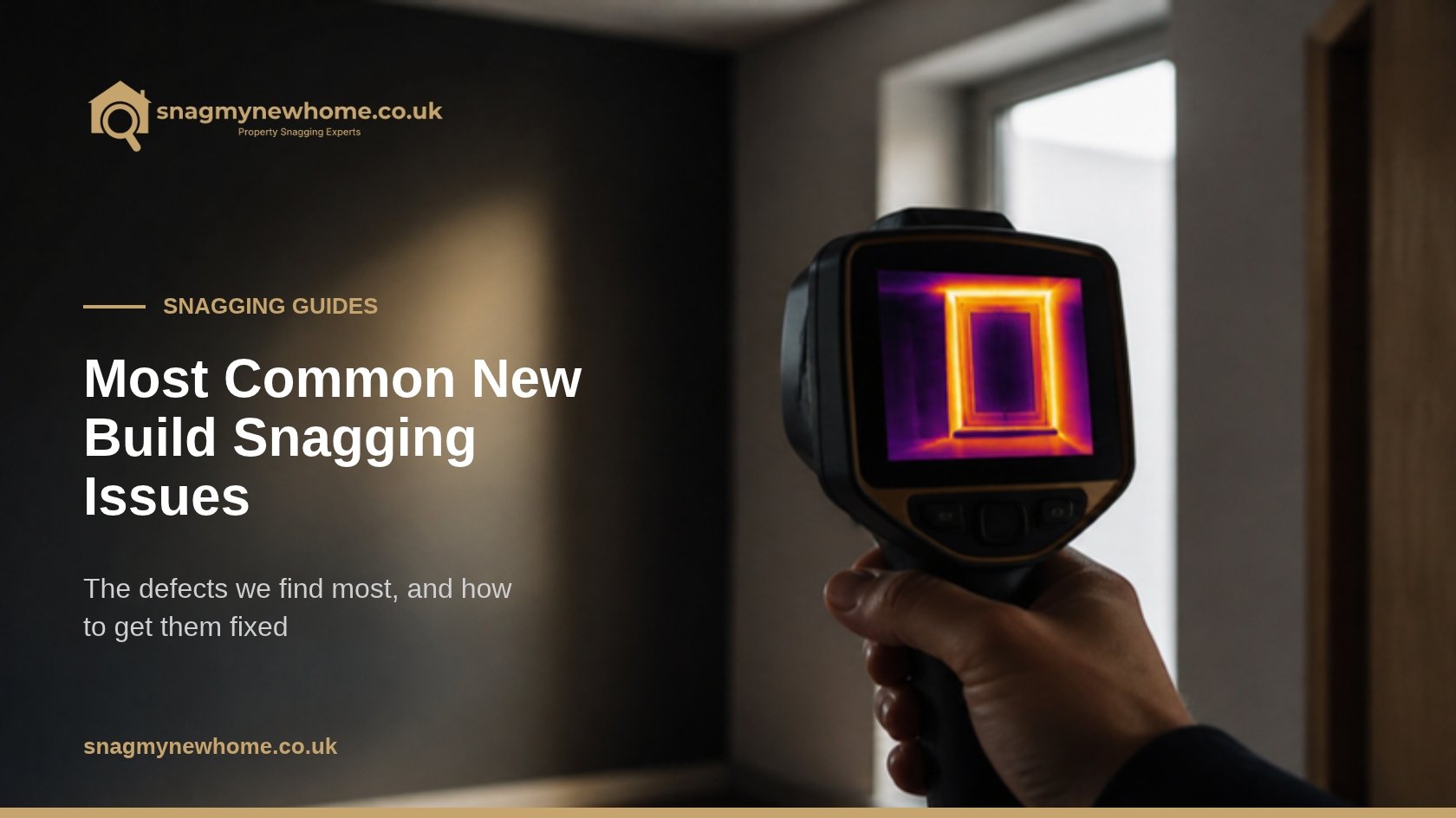
From cosmetic finishes to structural, plumbing and electrical faults, these are the defects our inspectors find most often in new build homes and how to get them fixed.
What makes a snagging company exceptional, from experience and independence to detailed reports and the right tools, and how to choose the right one for your new build.